50-550 Million Ounces of Gold. Plus Rare Earths. Documented by USGS. Nobody Can Reach It. Until Now.
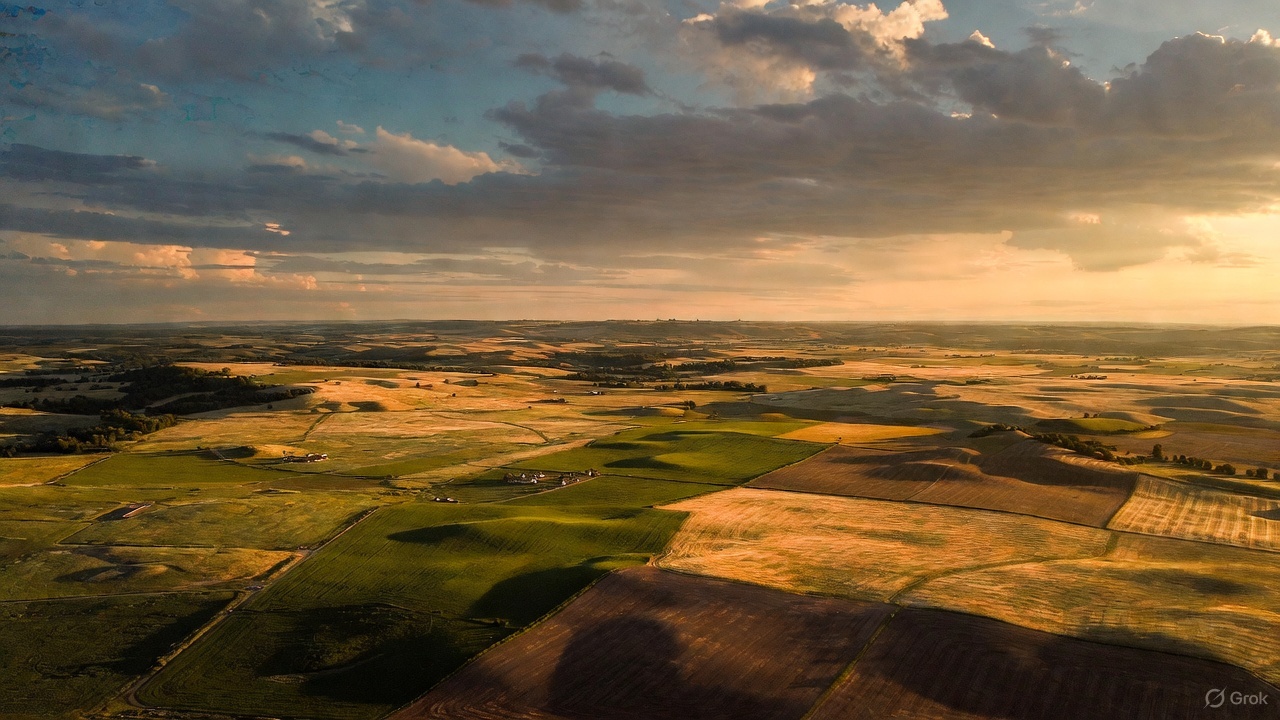
In the 1930s, government surveys found gold across 990 square miles of North Dakota. Depression-era miners confirmed it was there—but buried deep in water-saturated sediments that conventional mining couldn't touch economically. We're not digging it up. We're processing it underground. The formation becomes the separator. Only concentrated minerals come to surface.
Between 1933-1939, USGS and Federal Emergency Relief Administration surveys documented gold deposits across North Dakota's glacial valley. Every miner who looked found it. Every miner who tried to extract it went broke. The gold was real. Transported from Canadian Shield mining districts via glacial action. But buried beneath massive overburden in unconsolidated, water-saturated sediments, conventional mining methods lost money on every ton moved.
The Innovation:
We're NOT mining low-grade rock.
We're creating a subsurface gravity separation plant.
The formation becomes the processing vessel.
Only pre-concentrated material comes to surface.
Traditional mining fights water and moves millions of tons. We use water as our primary tool and process sediments in place. Conventional mines fail here because the ground is water-saturated and unconsolidated—exactly the conditions our technology needs to work.
The deposits have been waiting. The technology just arrived.
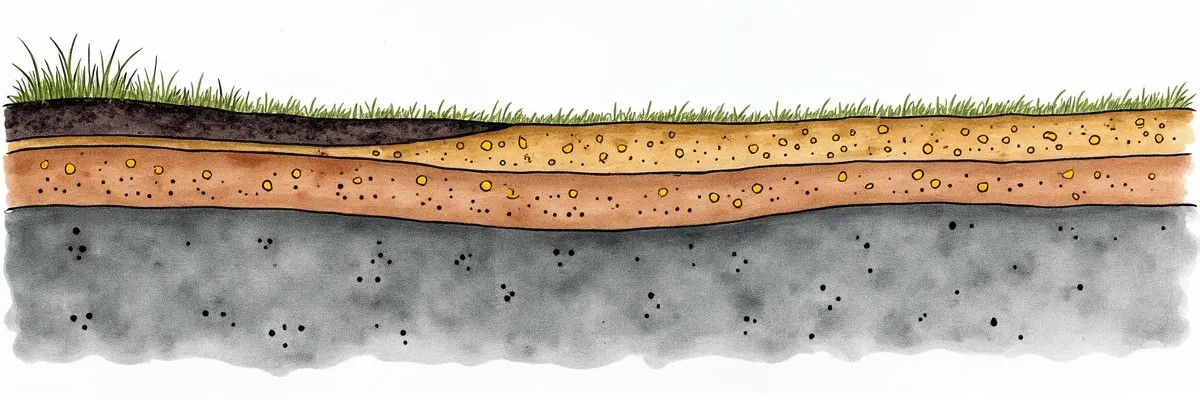
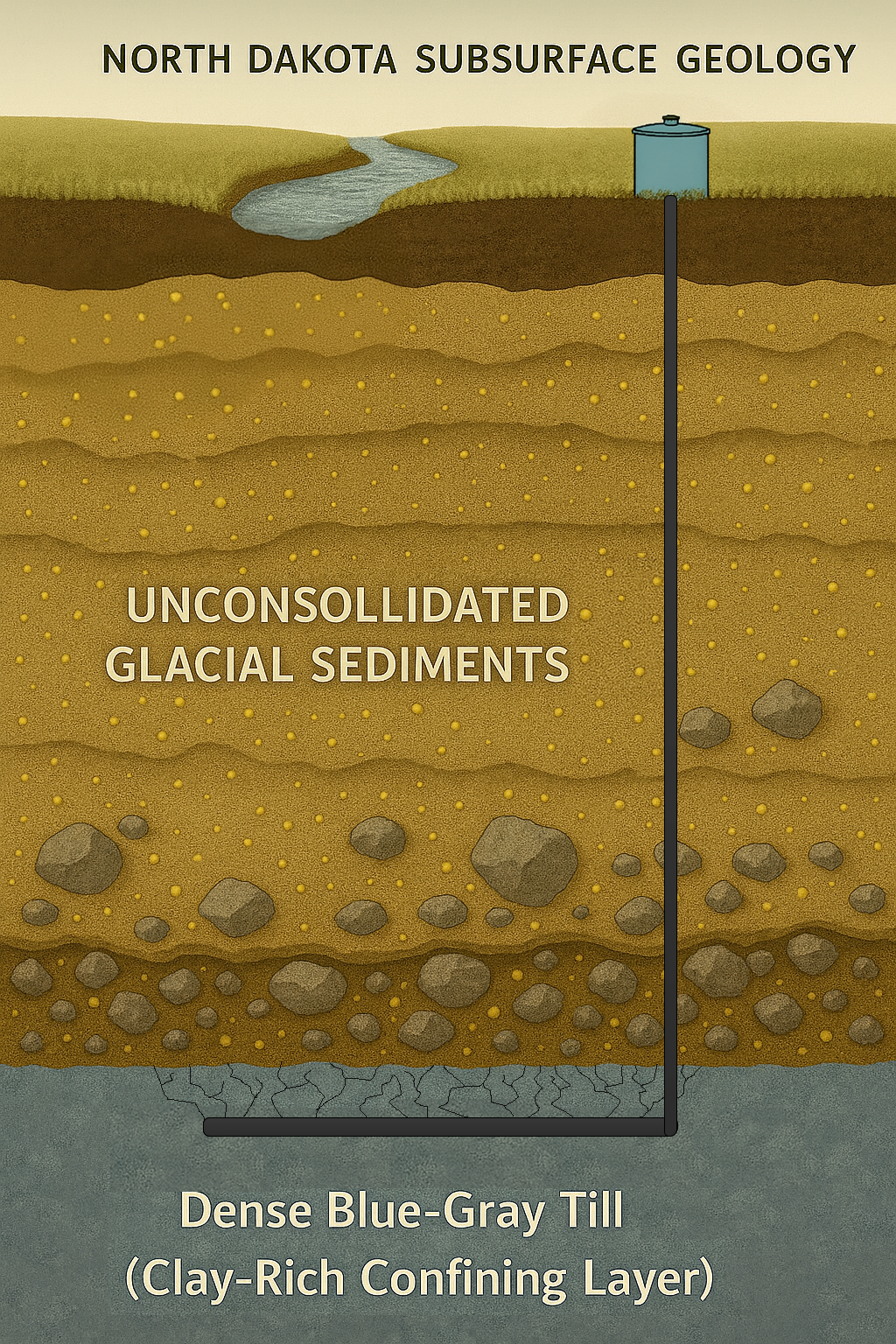
The problem isn't finding the gold—USGS already did that. The problem is extracting it from depth without moving millions of tons of overburden. Lost Horizon's patent-pending approach doesn't mine rock. We create engineered drainage networks in confining layers beneath mineral-bearing sediments, then use cyclic mobilization and electrokinetic treatment to separate and attract heavy minerals underground. We treat the subsurface as a giant processing plant. The formation does the work. We extract only concentrated minerals.
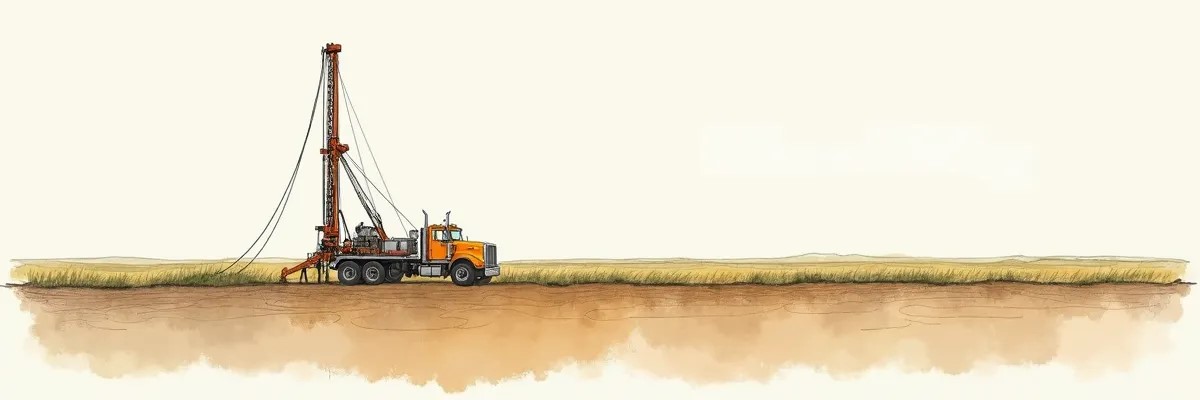
Drill into low-permeability confining layer beneath mineralized sediments. Pneumatically fracture to create interconnected drainage channels sized to collect heavy mineral grains.
Hydraulic injection, vibration, thermal cycling, and electrokinetic treatment (DC electric field) loosen sediments and pull conductive metals like gold toward collection points. 2.5-4x effective radius vs. mechanical alone.
Heavy minerals (SG > 4) settle downward through pore spaces into drainage network. Light sediments stay in place or are circulated away. Physics does the sorting.
Pump pre-concentrated heavy mineral slurry from drainage network. Process small volumes of high-grade material at surface. 95%+ water recycling in closed loop.
Federal geological survey documented gold presence across Souris River area. Government scientists confirmed deposits throughout the glacial valley system.
Federal Emergency Relief Administration funded Depression-era mining attempts. Miners confirmed gold was real—extraction methods just weren't economical with 1930s technology.
Laurentide Ice Sheet transported material from Canadian Shield mining districts: Flin Flon (Cu-Zn-Au), Lynn Lake (Ni-Cu), Snow Lake (Au-Cu). Source regions are proven, high-grade deposits.
Sulfide and gold-bearing minerals found on founder's Carpio property. Neighbor found Canadian Shield gold rock on adjacent land. Acid testing and microscopic analysis confirmed gold presence. Both properties upstream from historic gold sites.
Independent third-party geological review scheduled for Q1 2026.
Professional validation of resource estimates and extraction methodology by certified mining geologists.
The Strategy: North Dakota is the primary prize—$200B-$2T+ resource potential (conservative estimate). Prove the technology here, generate cash flow, then replicate the model in Alaska, Atlantic Coastal Plain, and license globally. Each success funds the next with minimal dilution. ND is the foundation; everything else is expansion.
Key Risk Mitigation: Even at 1/10th of conservative estimates, this represents a multi-billion dollar opportunity. Because we concentrate from large three-dimensional volumes and only process concentrates, economics work at extraordinarily low average grades.
Landowner Access: Early relationships established with multiple property owners in the documented zone. Landowner agreement structure (80/20 split) aligns incentives and minimizes acquisition costs—we only need extraction rights, not land ownership.
Key Concept: We create permanent drainage networks in confining layers beneath mineral-bearing sediments, then use cyclic mobilization + gravity separation to concentrate heavy minerals underground. The formation is the processing plant. We extract only pre-concentrated material.
Identify high-priority zones using historical USGS/FERA data, modern geological mapping, and geophysical analysis of glacial transport patterns
Drill into low-permeability confining layer beneath mineralized sediments (80-200 ft depth). Pneumatically fracture using compressed air/steam to create interconnected drainage channels. Steam injection vitrifies clay surfaces—permanently hardening fracture walls so they stay open indefinitely.
Hydraulic injection from above, air pressure from below, plus thermal cycling, optional vibration, and electrokinetic treatment (DC electric field) temporarily loosen thousands of cubic feet of overlying sediments. Electrokinetics preferentially pulls conductive metals like gold and platinum group minerals toward collection points. Water-saturated unconsolidated material becomes fluidized.
Stop mobilization energy. Let gravity work. Heavy minerals (specific gravity > 4) settle downward through pore spaces and drop into drainage network. Light sediments remain in place or are circulated away.
Pump pre-concentrated heavy mineral slurry from drainage network via airlift system. Only concentrated material comes to surface—not millions of tons of overburden.
Process concentrates at centralized facility using standard gravity separation (sluices, jigs, shaking tables). Recycle 95%+ of water back to subsurface. Repeat mobilization-settling-extraction cycles until treated volume is depleted.
Bottom Line: This technology solves the extraction challenge for deep, unconsolidated sediment deposits worldwide. We treat the subsurface as a processing plant instead of fighting to bring material to surface. North Dakota is the first application because we have 90 years of USGS data proving the resource exists—but the same method works anywhere you have similar geology. That's why Alaska, Atlantic Coastal Plain, and global licensing represent massive expansion opportunities once we demonstrate it in ND.
Primary Revenue | Years 1-10
High-Margin Scaling | Years 3-20
Strategic Validation | Years 2-10
These are conservative projections assuming limited resource base and gradual scaling. Scenarios with expanded resource potential could increase revenues significantly.
Lean by Design: This is a founder-operated pilot. No bloated executive team burning capital. Every dollar goes toward proving the technology works. Team expansion funded from production profits, not investor capital.
Founder & CEO
Pilot operations leverage existing North Dakota contractor relationships:
• Drilling: Local contractors with Bakken experience (on-call basis, not full-time hire)
• Geological Consulting: Third-party validation of results as needed
• Legal: Securities attorney for corporate formation and compliance
• Government Relations: Existing relationships with Senator Hoeven's office and state agencies
Post-Pilot Team Expansion: Once production proves profitable, hire full-time geologist, operations manager, and support staff—funded from production profits, not investor capital.
Patent-pending status (US 63/919,988, filed November 18, 2025) covers the specific application of subsurface drainage networks + cyclic mobilization + electrokinetic treatment + gravity separation to extract minerals from unconsolidated sediments. No competitor can legally replicate this method for 20 years. Even if patent is challenged, we have significant first-mover advantage and trade secret protections around specific implementation details.
Extensive USGS/FERA research compiled and analyzed over 5+ years. Proprietary understanding of glacial transport patterns, mineralization zones, and optimal extraction sites. This knowledge took years to compile and cannot be quickly replicated by competitors.
Outreach to Senator Hoeven's office and Department of Interior underway. Early landowner relationships established in documented gold-bearing region. Alaska Native corporation partnerships identified as priority targets. These relationships take time to develop and create barriers to competitor entry—first-mover advantage is significant.
Specific implementation details (steam vitrification parameters, electrokinetic field configurations, bidirectional mobilization techniques, drainage network geometry, fracture aperture sizing) are trade secrets that provide additional competitive protection beyond patent.
Securing extraction rights on prime North Dakota territory before market becomes aware of opportunity. Once we demonstrate the technology works, land costs will increase dramatically as competitors scramble for access.
"We're not competing to find gold—the USGS already found it 90 years ago.
We're competing to be first with technology that can extract it economically.
Patent protection ensures we're the only ones who can."
We're building a profitable business, not a flip. Lost Horizon plans to remain private and pay dividends from production proceeds.
The Value Driver: Once pilot extraction proves profitable, investors receive quarterly dividends. At expected production rates, early investors could receive their full investment back within 2-3 years, then continue receiving returns indefinitely. This is how generational wealth is built.
If we eventually go public or spin off assets, your equity participates fully. But dividends from profitable operations are the primary return mechanism—not speculation on a future exit.
Capital Strategy: $500K pilot round funds land acquisition, 3-well pilot extraction program, and 12 months of operations. Pilot proves the technology and generates cash flow. Subsequent expansion funded from production proceeds—minimal dilution for early investors.
10% contingency reserve for unexpected drilling conditions, equipment failures, additional testing, or extended operations. If unused, rolls into Phase 2 expansion capital.
The Investment Opportunity: Pilot investors get in at $5M pre-money on a company sitting on potentially the largest gold deposit in U.S. history. If the pilot works, you own 10% of a cash-generating machine. Dividends start flowing within 12 months. No waiting a decade for an exit—the asset pays you back directly.
The business case has exceptional downside protection built in:
We're a mining company with proprietary extraction technology. The primary business is extracting gold and rare earths from documented North Dakota deposits. The technology is the competitive moat that makes it possible—it's patent-protected and gives us 20 years of exclusivity. But we're not in the business of selling technology; we're in the business of producing minerals from deposits that nobody else can access. Think of us as an oil company that owns the only drill bit that can reach a specific oil field. The technology matters, but the oil field is what makes it valuable.
Expansion strategy: Once we demonstrate it works in ND and establish production, we'll replicate the model in Alaska and license globally. But ND is the foundation—the deposits, the operational validation, and the initial cash flow generator.
We're NOT mining rock. We're processing sediments in place. Conventional mining moves millions of tons to surface for processing. We create engineered drainage networks in confining layers beneath mineral-bearing sediments, use cyclic mobilization and electrokinetic treatment to loosen sediments and attract conductive metals toward collection points, let gravity separate heavy minerals into our drainage system, then extract only pre-concentrated material.
The key difference: We treat the subsurface as a giant processing plant. Each well processes thousands of cubic feet of sediment across multiple cycles. The formation does the gravity separation work. Electrokinetics actively pulls gold and platinum group metals toward our collection wells. We extract only concentrates—not millions of tons of low-grade material. This fundamentally changes the economics and is why we can operate profitably where conventional mining failed.
Each component is proven: USGS documented the gold, horizontal drilling works (Bakken proves it - same rigs, same operators), hydraulic fracturing works (Bakken proves it right here in North Dakota), airlift recovery works (used successfully in underwater mining operations), gravity separation works (standard method since the 1800s), electrokinetics works (proven in soil remediation and mineral processing). What we're demonstrating with initial production wells is the economic parameters at scale—recovery rates, processing costs, and extraction efficiency. The first 2-3 production wells will generate this operational data within 90 days, validating the business model.
Three reasons: (1) Technology didn't exist - Hydraulic fracturing became economically viable and widely adopted only in the past 15-20 years. (2) Commodity prices - At gold prices below $1,500/oz, extraction wasn't profitable. At $4,000/oz, the economics completely change. (3) Knowledge gap - It takes specific geological knowledge of both the Canadian Shield source regions AND glacial transport patterns to understand where/how these deposits formed. We spent 5+ years compiling historical USGS data that most people don't know exists.
Biggest risk: The extraction technology doesn't work at commercial scale. We might successfully drill wells and fracture the formation, but the heavy minerals don't concentrate efficiently or the recovery rate is too low for profitable operation. Mitigation: Each component is proven separately, we're just combining them. Initial production wells will validate operational feasibility before major capital commitment. Even if North Dakota doesn't work as projected, the patent and technology still have value for other applications (Alaska, Atlantic Coastal Plain, global licensing).
Other risks: Resource estimates are lower than projected, permitting delays, commodity price decline, competition (though patent protects against direct replication). All mining ventures have geological risk—we mitigate with extensive historical USGS data confirming gold presence.
Risk/reward asymmetry. Seed investors get in at $5M pre-money valuation on a company that could generate billions in production value. Once the pilot proves extraction works, the company value increases dramatically. Early investors get the best terms because they're taking the technology risk. Once we demonstrate consistent extraction, future investors will pay much higher valuations. You're buying a stake in a cash-generating asset before it's proven—that's where the asymmetric returns come from.
The business case has extraordinary margin of safety. Our breakeven grade is ~1.0 g/ton, but documented regional grades are 3-6 g/ton—a 3-6x buffer before we lose money. Because we concentrate from large three-dimensional volumes (thousands of cubic feet per well) and only process concentrates at surface, the economics work even if grades are lower than expected. Even if the resource is 1/10th of our estimates, that's still 5-55 million ounces—a $20-220 billion gross resource. The pilot is designed to prove actual grades before we scale, so we'll know exactly what we're working with before committing major capital.
We're building a cash-generating business, not a flip. Lost Horizon intends to remain private and pay dividends from production proceeds. Once pilot extraction demonstrates profitability, investors receive quarterly distributions proportional to their ownership stake. At expected production rates, early investors could receive their full investment back within 2-3 years, then continue receiving dividends indefinitely.
Future liquidity options: If we eventually go public or spin off assets, your equity participates fully. But the primary return mechanism is ongoing dividends from profitable operations—similar to how private oil companies or family businesses operate. You're buying a stake in a cash-generating asset, not betting on a future exit event.
We're raising $500,000 at $5,000,000 pre-money valuation
Ready to participate in this opportunity?
Contact Ted Farni directly to begin the investment process.
Ted Farni, Founder & CEO
Lost Horizon Inc.
Email: [email protected]
Website: losthorizon.gold